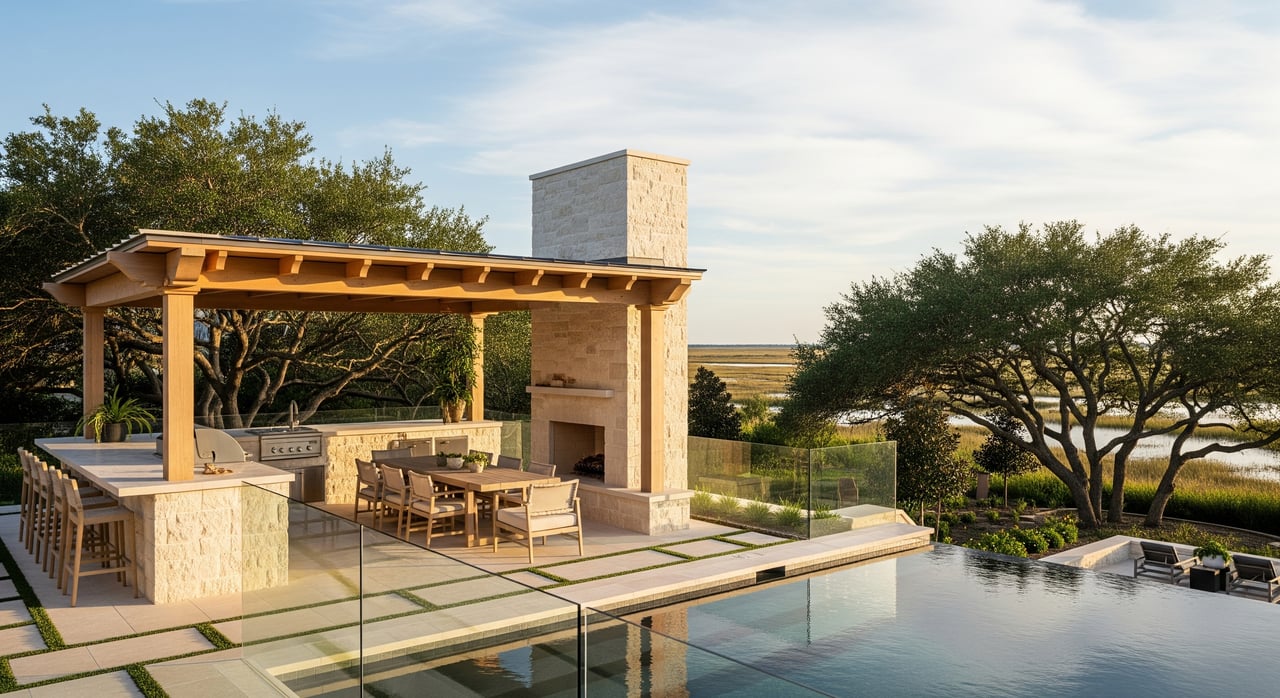
Is your Bay Oaks backyard pulling its weight, or is the heat, humidity, and mosquitoes keeping you inside? You are not alone. In coastal Harris County, the right outdoor upgrades make daily life easier and give buyers a reason to fall in love with your home. In this guide, you will learn which improvements deliver comfort, durability, and resale appeal in Bay Oaks, plus how to choose materials that hold up to salt air and storms. Let’s dive in.
What Bay Oaks buyers want from outdoor space
Hot, humid summers and stormy seasons shape how you live outside. Shade, airflow, and protection from rain and insects matter as much as style. Usable outdoor rooms, low-maintenance finishes, and good lighting top most buyer wish lists in warm markets. In Harris County, you also need to plan for heavy rainfall, flood risk, and coastal corrosion while staying on top of permits and HOA approvals.
For planning, start with local data. Review climate basics through the NOAA climate normals for the Houston area. Check flood risk on the FEMA Flood Map Service Center and local drainage context with Harris County Flood Control District guidance. These resources help you place structures, route water, and choose materials that will last.
High-impact upgrades that win
Shade-first covered patios
Covered patios, pergolas with adjustable shade, or insulated roof structures make the yard usable for more of the year. Add ceiling fans, dimmable lighting, and a layout that keeps furniture dry during downpours.
Practical tips:
- Pitch roofs and gutters to move water away fast.
- Choose corrosion-resistant fasteners and fixtures.
- Plan fan locations for cross-breeze, not just overhead cooling.
Screened and three-season rooms
Screened porches and three-season rooms cut the humidity and insects while preserving the feeling of being outdoors. They are especially appealing during peak mosquito months and summer afternoons.
What to consider:
- Confirm how your enclosure is classified for building code and permitting.
- Add solid flooring and outlets for flexible furniture layouts and task lighting.
Low-maintenance decking and hardscape
Composite decking and quality concrete or stone patios reduce upkeep in Bay Oaks’ humid, coastal conditions. If you prefer wood, pressure-treated lumber or tropical hardwoods need proper ventilation and maintenance.
Best practices:
- Use stainless steel or hot-dipped galvanized hardware.
- Consider permeable pavers where you want to reduce runoff and manage puddling.
Outdoor kitchens that last
Outdoor kitchens are popular for entertaining, but coastal conditions demand the right specs. Look for stainless steel appliances, sealed stone or porcelain countertops, and cabinetry designed for outdoor and marine environments.
Checklist:
- Plan gas, electrical, and plumbing with licensed pros and permits.
- Provide ventilation, splash protection, and cover from direct rain.
- Prioritize easy-to-clean finishes that resist salt and grease.
Fire features, safely done
Gas fire pits and outdoor fireplaces extend evening use without heavy smoke. Follow safety setbacks and confirm local rules before installation.
Good choices:
- Gas-fired features with auto ignition and shutoff.
- Non-combustible surroundings with wind screening as needed.
Thoughtful pools and spas
Pools can be desirable in hot climates, but they add ongoing maintenance, repairs, and insurance costs. In smaller yards, a plunge pool or spa may deliver the same lifestyle benefits with less upkeep.
Before you build:
- Verify flood status and elevation requirements on FEMA maps.
- Weigh neighborhood norms and lot size to gauge buyer appeal.
- Document permits and warranties to reassure future buyers.
Drainage and water-smart landscaping
Heavy rains are part of life here. Smart grading, swales, French drains, and permeable surfaces help move water away from living areas and foundations.
Action steps:
- Walk the site during or after a storm to spot pooling.
- Tie downspouts into drainage solutions where appropriate.
- Use hardscape that allows infiltration in problem areas.
Mosquito mitigation that works
Insect pressure is real in humid, coastal neighborhoods. Screened enclosures, fans that move air, and eliminating standing water go a long way. Some owners layer in misting systems or targeted repellents.
Keep it simple:
- Fix low spots where water collects.
- Use screened weep holes and covered rain barrels.
- Add fans to patios and porches for comfort.
Coastal-rated lighting and power
LED, low-voltage landscape lighting improves safety and ambiance while keeping energy use low. Choose fixtures rated for wet and coastal environments. For efficiency guidance, review the U.S. Department of Energy’s LED lighting resources.
Quick adds:
- Path lights for travel routes and steps.
- Uplights for trees and architectural features.
- Covered, GFCI-protected outlets where you plan to plug in.
Privacy and fencing
Thoughtful screening creates a calm, private space without feeling closed in. Combine evergreen plantings with fences that meet neighborhood guidelines.
Design ideas:
- Layer shrubs and ornamental grasses for soft sound buffering.
- Choose rot- and corrosion-resistant fence materials.
- Confirm height and design rules with your HOA before ordering materials.
Materials and plants that go the distance
Coastal humidity and salt exposure shorten the life of the wrong materials. A few choices pay off over time.
Durable picks:
- Metals: marine-grade stainless steel where practical, or powder-coated aluminum.
- Decking: composite or dense hardwoods with corrosion-resistant fasteners.
- Surfaces: concrete, porcelain pavers, or natural stone for low maintenance.
- Appliances: outdoor-rated stainless steel and sealed cabinetry.
For plantings, lean on native or regionally adapted species that tolerate heat, humidity, and occasional salt spray. They typically need less water, fewer chemicals, and resist local pests better. For ideas and regional best practices, browse Texas A&M AgriLife Extension guidance on coastal landscaping.
Planting strategy:
- Use layered design: canopy trees for shade, shrubs for screening, groundcovers and grasses for texture and erosion control.
- Site trees and large shrubs to block western sun and frame outdoor rooms.
- Choose plants that will not drop heavy litter directly over pools or decks.
Permits, HOA, and flood rules
Before you commit to a design, confirm local requirements. Structural additions, enclosures, and any electrical, gas, or plumbing work usually require permits and inspections. If your property lies in a flood zone, additional elevation or construction standards may apply.
Your due-diligence checklist:
- Confirm flood status on the FEMA Flood Map Service Center.
- Review local drainage context with the Harris County Flood Control District.
- Obtain written HOA or architectural review approval for exterior changes.
- Use licensed, insured contractors who understand coastal wind and code requirements.
Budget, maintenance, and resale strategy
Think in terms of lifecycle costs, not just installation price. Covered patios, composite decking, quality lighting, and native landscaping usually offer strong day-to-day value and broad buyer appeal. Pools, elaborate outdoor kitchens, and natural wood features can be wonderful, but they bring higher upkeep and operating costs.
To support resale:
- Choose durable, low-maintenance finishes and document all warranties.
- Keep designs consistent with neighborhood norms and lot size.
- Stage outdoor areas with shade, seating, and soft lighting so buyers can picture daily life there.
For insight into what resonates with buyers nationally, skim the National Association of Realtors’ Remodeling Impact Report on outdoor features. Use it as a guide, then tailor choices to Bay Oaks’ climate and HOA standards.
Quick planning checklist
- Evaluate shade, airflow, and rain protection where you spend the most time.
- Map water flow across your lot during storms and plan drainage fixes first.
- Select coastal-rated materials, fixtures, and hardware.
- Confirm flood status, permits, inspections, and HOA approvals.
- Prioritize covered seating, screens, fans, and lighting for immediate comfort.
- Add low-maintenance planting with native or adapted species.
- Keep records: designs, permits, contractor info, and warranties for buyers.
Work with a local pro who gets Bay Oaks
If you want outdoor upgrades that look great, stand up to coastal weather, and impress buyers, you need a plan built for Bay Oaks. Our team pairs neighborhood insight with concierge-level guidance, from concept and contractor introductions to staging and premium marketing at listing time. Ready to design a backyard that works as hard as you do? Request a Complimentary Concierge Consultation with Living Vogue Real Estate.
FAQs
Are covered patios worth it in Bay Oaks?
- Yes. Shade and rain protection extend daily use, and when built with coastal-rated materials and fans, they deliver comfort and broad buyer appeal.
Do I need a permit for an outdoor kitchen in Harris County?
- Usually. Structural changes and any gas, electrical, or plumbing work commonly require permits and inspections. Always verify with the local building department and your HOA.
How can I reduce mosquitoes without a screen room?
- Improve drainage to remove standing water, add ceiling or wall-mounted fans for airflow, and consider targeted treatments or a professional misting system if needed.
Are pools a smart investment in Bay Oaks?
- It depends on lot size, neighborhood norms, and your maintenance budget. Plunge pools or spas can offer lifestyle benefits with lower costs than full-size pools.
How do I handle drainage for heavy rain in coastal Harris County?
- Use grading, swales, French drains, and permeable paving to move water away from structures. Confirm flood risk on FEMA maps and consult local guidance from HCFCD.
Which materials resist coastal corrosion best for outdoor use?
- Choose marine-grade stainless steel or powder-coated aluminum for metals, composite or dense hardwoods with galvanized or stainless fasteners, and durable stone or concrete surfaces.